Dog Medication Log: What to Track Before Your Next Vet Visit
Dog medication log tips for pet parents: what to track, how to spot patterns, and how to make your next vet visit easier.
There is a very specific kind of panic that happens when the vet asks, “So, when did this start?”
You know the answer exists somewhere in your brain. You remember the weird appetite day. You remember the missed breakfast. You remember giving the medication, probably in the morning, unless that was yesterday. Then suddenly your memory turns into soup and you are trying to reconstruct your dog’s week like a detective with bad Wi-Fi.
Been there. More than once.
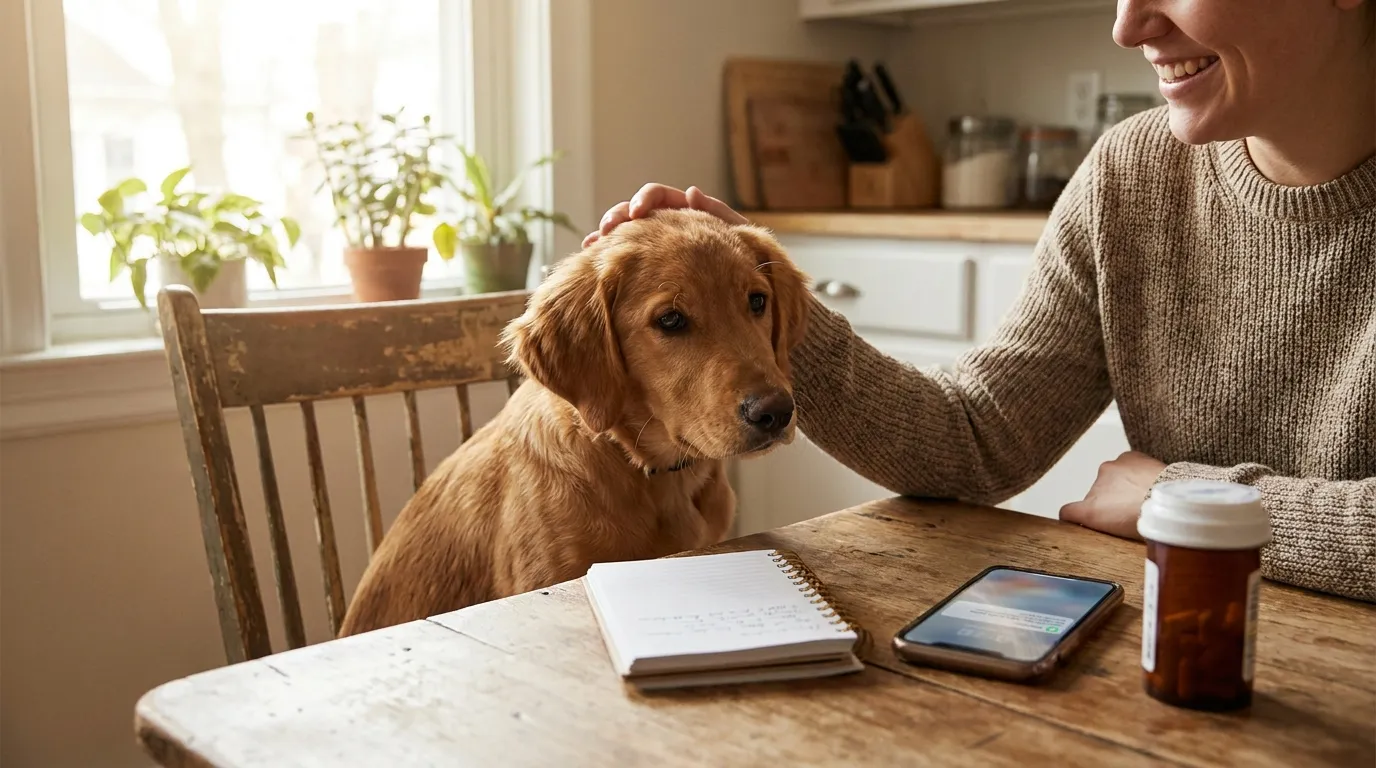
A dog medication log sounds boring, but it is one of those boring things that becomes extremely useful at the exact moment you need it. It gives your vet a clearer picture, helps you avoid double-dosing or missed doses, and gives you less to carry in your head when your dog is already making you worry.
A dog medication log is not just for complicated cases
A lot of pet parents assume a medication log only matters if their dog is on five prescriptions, recovering from surgery, or dealing with something serious. And sure, it is definitely useful there. But even a simple antibiotic course can get messy in a normal house.
One person gives breakfast. Someone else gives dinner. You are tired. The bottle says every 12 hours. Your dog spits out half a pill and you are not sure how much actually went in. Then the vet asks if the medication is helping and all you have is a vague feeling that things are maybe better.
That is where a dog medication log helps. Not because you need to turn pet care into a spreadsheet hobby. Because a simple record turns “I think” into “here is what happened.”
Track the basics first
The core of a good dog medication log is simple: medication name, dose, time given, who gave it, and whether anything unusual happened after.
That is enough to answer most of the questions your vet will ask. Was the medication given on time? Was it given with food? Did vomiting happen before or after the dose? Did your dog seem sleepy the whole day, or only a few hours after taking it? Did you miss one dose, or did the schedule drift for three days because life got chaotic?
The point is not to write an essay every time. Most days, a quick note is enough. “8 AM, given with breakfast, normal appetite” is boring. Beautifully boring, actually. Boring records are how you notice the non-boring days.
Add symptoms without trying to diagnose them
This part matters: you are not logging symptoms so you can become your own vet. Please do not do that. Google already has enough power over anxious pet parents.
You are logging symptoms so your vet can see patterns.
If your dog vomits, note the time and whether it happened near the dose. If appetite changes, write whether they skipped a meal, ate less, or refused everything. If energy is low, describe what you actually saw. “Would not get up for the usual walk” is more useful than “seemed sad.” If stool changes, water intake changes, itching, shaking, coughing, or weird behavior show up, write it down in plain language.
When Arya was going through her more complicated treatment periods, the hardest part was not only giving the meds. It was keeping the whole timeline straight while also being worried out of my mind. Pills, drops, antibiotics, vet instructions, follow-ups. My brain was not built to be a reliable database under stress. That experience is a big part of why I built Arya.
Refills belong in the same system
The most annoying medication problem is the one that feels preventable five minutes after it happens.
You pick up the bottle, realize there are two doses left, and now you are playing the very fun game of “will the vet approve this refill before we run out?” Absolute cinema.
Your dog medication log should also help you know when supply is getting low. If the medication is ongoing, add a refill reminder several days before the bottle is empty. Some prescriptions need vet approval. Some pharmacies take time. Some clinics are closed on weekends because apparently the universe enjoys side quests.
A simple rule helps: when you open the last week of medication, start the refill process. That little habit can save you a surprising amount of stress.
Bring the log to the vet visit
The best time to organize your notes is before you are sitting in the exam room trying to remember everything while your dog investigates the trash can.
Before the appointment, skim the log and look for the story it tells. When did the medication start? Were any doses missed or late? Did symptoms improve, worsen, or stay the same? Were there side effects? Did anything else change, like food, supplements, flea and tick prevention, travel, boarding, or a new routine?
You do not need to present it like a medical journal. Just having dates and observations ready makes the appointment more useful. It gives your vet something concrete to work with, and it helps you leave with clearer instructions.
The real win is less second-guessing
A dog medication log will not make a sick dog magically better. I wish. What it does is remove a lot of the unnecessary chaos around care.
You stop asking, “Did I give it?” You stop relying on memory when you are tired. You stop showing up to the vet with a week of blurry guesses. You start seeing patterns earlier and communicating them better.
That is the whole idea behind Arya: Pill Reminder. I built it because caring for Arya got complicated fast, and I needed one place for reminders, dose history, refills, and notes. Not because I wanted more admin work. Because I wanted less panic.
If your dog is on medication and you want a simple way to keep a dog medication log, Arya is free to start on the App Store and Google Play. Your future self at the vet will be very grateful. 🐾