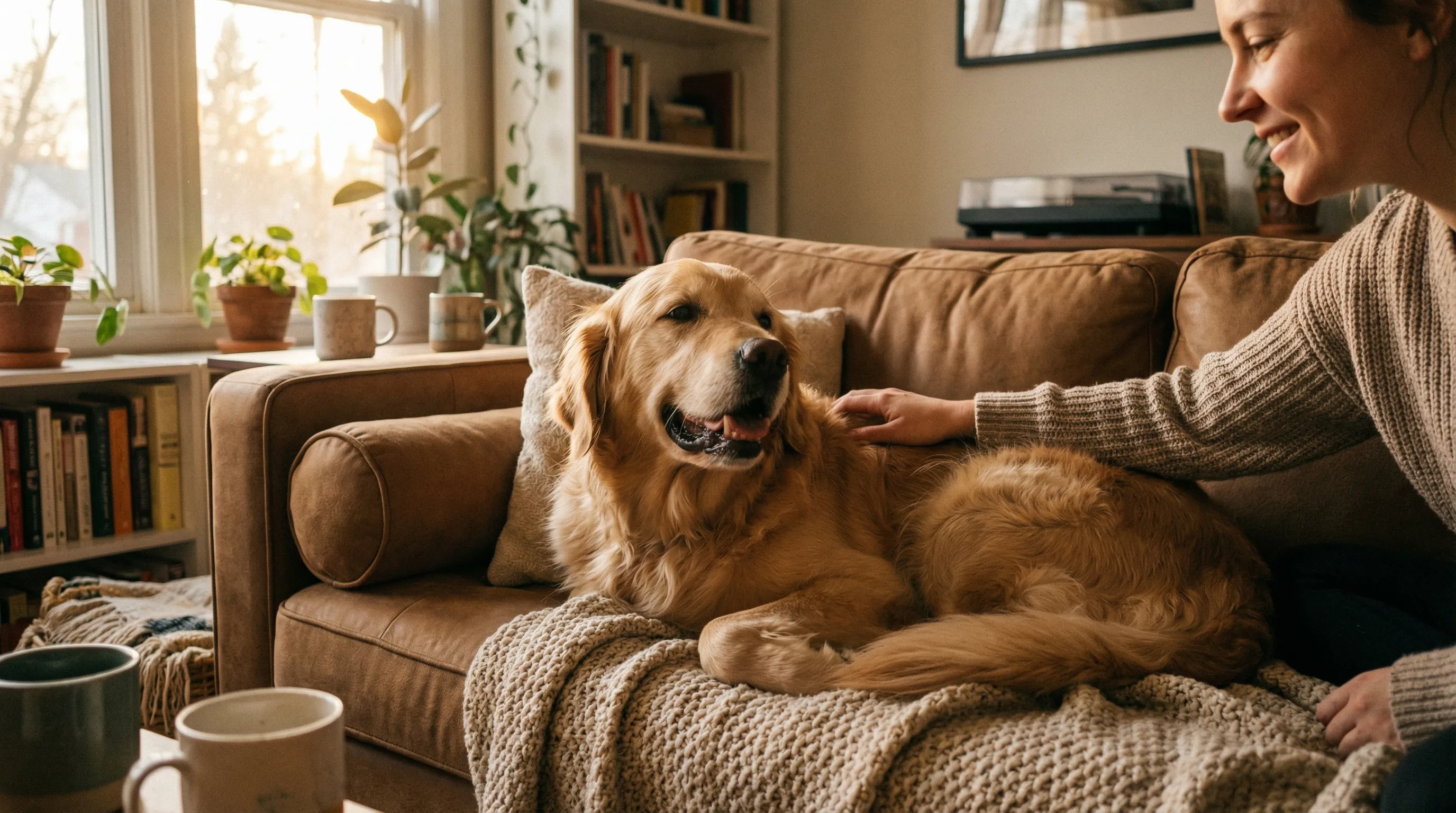
How to Tell If Your Dog Is in Pain: Signs Most Pet Parents Miss
Dogs hide pain by instinct. Learn the subtle signs your dog is hurting, what to watch for beyond the obvious, and when to call your vet.
There was a Tuesday last year when Arya came in from the yard and something was just… off. She didn’t run to her bowl. She sat down slowly, more carefully than usual, and looked at me with this expression I couldn’t quite place. No yelping. No obvious limp. Just a kind of quietness that wasn’t her normal quietness.
I almost missed it.
Dogs don’t tell you when they’re hurting. That’s not stubbornness or bad communication: it’s survival instinct. In the wild, showing weakness puts you at risk. So dogs are wired to push through pain and mask the signs, often until it becomes impossible to hide. Which means by the time a dog is obviously, visibly suffering, they’ve usually been dealing with discomfort for a while.
This is one of the harder parts of being a pet parent: learning to read the signals that aren’t loud.
The signs that actually look like something else
The most common mistake is waiting for a clear sign like crying or limping before taking action. But the early signals are quieter and easier to explain away.
Watch how your dog gets up from lying down. If there’s a pause, a hesitation, a little grunt before they stand, that’s worth noting. Healthy dogs spring up without a second thought. When they start calculating how to get up, something hurts.
Posture changes are another one. A dog holding their head lower than usual, keeping their tail tucked, or standing with their back slightly arched is often bracing against pain. It’s not dramatic. It looks like a bad mood. But it’s the body doing damage control.
Excessive licking or chewing at one specific spot is a huge tell. Dogs self-soothe by licking, so if your dog is obsessively working at the same paw, the same spot on their leg, or the same area of their body, there’s a good chance something hurts or irritates there. The spot might not even look red or swollen yet.
Panting when they haven’t been active and it’s not hot outside is a reliable pain indicator. Same with trembling at rest. These are nervous system responses, the body under stress. If Arya is panting while lying on the couch on a cool evening, I pay attention.
The behavioral shifts that get ignored
A dog in pain often goes quiet in ways you might read as them just being calm or tired. They stop initiating play. They pick spots to rest that are harder to reach: under the bed, behind furniture, because they want to be left alone. A normally social dog suddenly preferring to be by themselves is not just a mood thing.
Appetite changes tell you something too. A dog turning away from food they normally inhale, eating slower than usual, or showing interest and then backing off could be dealing with nausea from pain or discomfort when bending to reach the bowl.
The one that surprised me the most with Arya: sleep disruption. A dog that’s restless at night, circling before lying down, getting up and changing positions repeatedly, is often trying to find a position that hurts less. I used to think she was just being dramatic. She was not being dramatic.
And then there’s aggression that comes out of nowhere. A gentle dog that snaps or growls when you touch a specific area, or even just when you approach them unexpectedly, isn’t being bad. They’re telling you: that spot hurts, please don’t. The growl is communication, not attitude.
What to do when something feels off
The first thing is: don’t give your dog human pain medication. Ibuprofen, acetaminophen, and most human NSAIDs are toxic to dogs. Some can cause kidney failure or internal bleeding after a single dose. If you think your dog is hurting, that’s a call to your vet, not a trip to your own medicine cabinet.
Keep a note of what you’re seeing. When did it start? Is it constant or does it come and go? Is it worse after activity or first thing in the morning? Vets ask these questions and the answers actually matter for diagnosis. A dog that’s stiff only in the morning points to arthritis. A dog that hurts more after a run might have a soft tissue injury. Patterns tell the story.
This is where I find the tracking side of Arya: Pill Reminder genuinely useful beyond just medication reminders. When Arya was going through a stretch of joint issues, being able to log what I noticed each day, when she got her meds, and how she seemed afterward gave me something concrete to bring to the vet. Not “she seemed off lately” but actual dates and observations.
If your dog ends up on a pain management medication, consistency matters more than people expect. Missing doses or dosing at irregular times can make the medication significantly less effective, and the signs creep back faster than you’d think.
Dogs don’t complain out loud
Arya turned out to have some early soft tissue inflammation that day. Caught early, managed with a short course of anti-inflammatories, and she was back to her chaotic self within a week. If I had chalked her quietness up to a weird Tuesday and moved on, it probably would have gotten worse before I noticed.
You know your dog’s normal. Trust that. When something feels different, it usually is.
If your dog is managing pain medication or a recovery regimen and you want a simple way to stay consistent, the Arya app is free on iOS and Android. It takes two minutes to set up and takes the guesswork out of “did I give it this morning.” 🐾