How to Give Ear Drops to a Dog Without Making It a Fight
How to give ear drops to a dog with less stress: a calm routine for medication, gentle handling, and knowing when to call your vet.
The first time you need to give ear drops to a dog, it can feel weirdly high-stakes. You have a small bottle, a dog who has suddenly decided their ears are private property, and a prescription you really do not want to mess up. Then the dog shakes their whole head, the drops go somewhere, and you are left wondering whether any of it counted.
I know that feeling from managing Arya’s treatments. When your dog has more than one medication or a course that lasts days, the hardest part is often not caring enough. It is keeping the routine clear when life gets busy.
This is a practical guide to how to give ear drops to a dog calmly and safely. It cannot replace the directions on your dog’s prescription, so use your vet’s dose and timing first. The goal is to make that plan easier to follow.
Set up before your dog notices the bottle
Read the label before you call your dog over. Check which ear needs treatment, how many drops the vet prescribed, how often to use them, and whether the bottle says to shake it. Some products have instructions that differ from the usual routine, so the label and your vet win every time.
Pick a quiet spot with decent light. For a small dog, your lap may work. With a larger dog, sit beside them and keep their body gently against a wall. A second calm person can help if your dog is wiggly.
Keep a tissue nearby for the outside of the ear and the bottle tip afterward. Do not put cotton swabs down the ear canal. They can push debris deeper or hurt an already sore ear.
How to give ear drops to a dog, step by step
Start with a little normal affection. A few seconds of calm petting around the head gives your dog a chance to settle before the medicine appears. If the bottle feels cold, hold it in your hands briefly. Do not heat it unless your veterinarian or the medication instructions say you can.
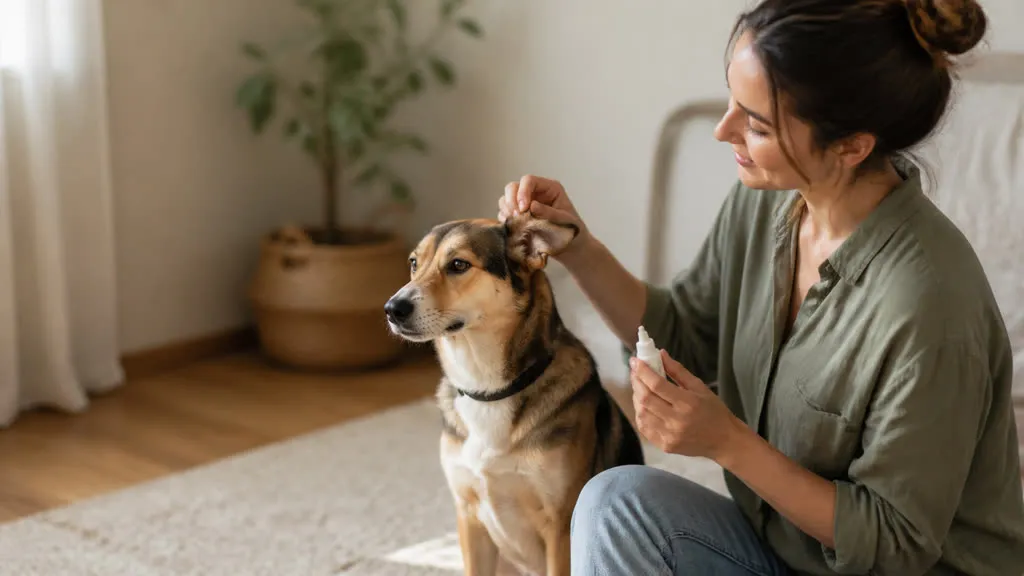
Lift the ear flap gently so the ear canal opens. Hold the bottle near the entrance of the canal and give exactly the amount prescribed. Whether the tip should touch the ear depends on the product, so follow the label. Never push the tip deep into the ear.
After the drops are in, keep the ear flap up and massage the base of the ear with your fingers for around 30 seconds. You may hear a soft squishing sound. That is usually the medication moving through the canal. Then step back and let your dog shake their head. Wipe only the excess that comes out onto the outer ear.
That is the basic answer to how to give ear drops to a dog. It is simple on paper, but it gets much easier when the same order happens every time: calm approach, prescribed drops, gentle massage, release.
If your vet also prescribed ear cleaning
Ear cleaner and ear medication are not interchangeable. If your vet asked you to clean the ears too, ask about the order and timing for your specific products. Often, cleaning happens before medication, but some cleaners can affect how a medicine works and some treatments come with different instructions.
Do not decide to clean deeper because the ear looks messy. Do not add an over-the-counter product because it sounds helpful. An irritated ear can be painful, and your vet knows what they are treating.
Make the treatment routine easier on both of you
A tiny reward after the treatment can change the mood over a few days. It does not need to be elaborate. The point is to help your dog learn that the bottle does not always mean a wrestling match.
It also helps to keep the treatment visible somewhere reliable. When a course happens twice a day, the question becomes less about technique and more about memory: Did I already give the morning dose? Was it the left ear or both? Did my partner do it?
That is why I built Arya: Pill Reminder. Arya’s health problems started when she was young, and managing pills, drops, antibiotics, and vet instructions got overwhelming fast. The app gives me one place to record a dose as soon as it happens, set the next reminder, and stop relying on a foggy memory at the end of a long day.
When to pause and call the vet
Some resistance is normal. A dog may dislike having their ear handled, especially at first. But pause and contact your vet if your dog seems sharply painful, the ear becomes very swollen, you see blood, there is a strong foul smell, or your dog develops a new balance problem. Also call if you cannot safely give the medication or if you are unsure whether a dose went in. Do not double the next dose to make up for a questionable one.
Giving ear drops is not glamorous pet parenting. It is one of those small, repetitive jobs that matters because your dog is counting on you. Keep the setup calm, follow the prescription, make a quick note when it is done, and let consistency do the heavy lifting.
If medication reminders would take one thing off your mind, download Arya: Pill Reminder on the App Store or Google Play. 🐾