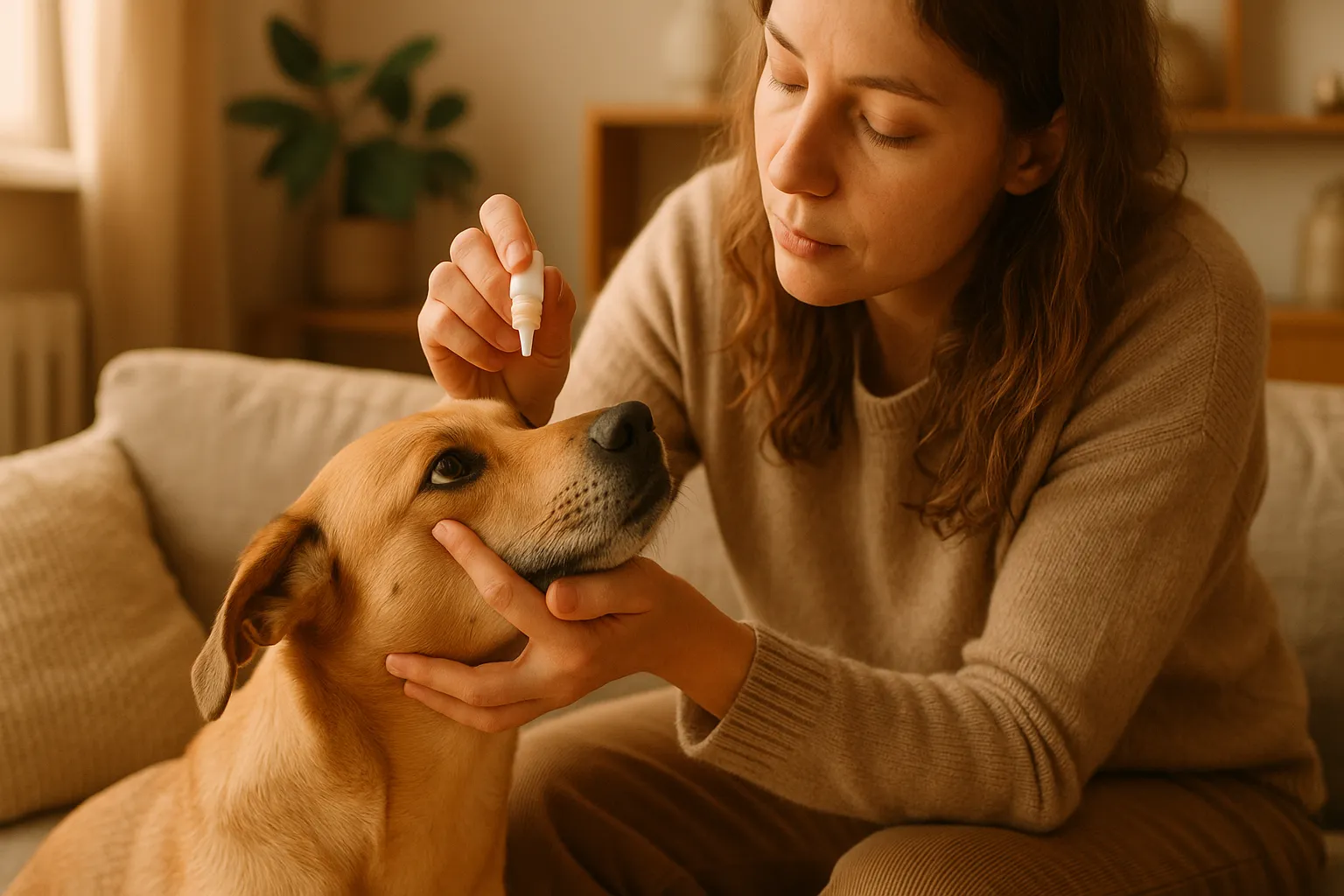
How to Give Eye Drops to a Dog Without Turning It Into a Fight
How to give eye drops to a dog, step by step. Learn how to stay calm, avoid common mistakes, and make eye meds easier for both of you.
If you have ever tried giving eye drops to a dog, you already know the problem is rarely the drop itself. It is the whole little drama around it. The second your dog sees the bottle, suddenly they have somewhere urgent to be.
I know that feeling a little too well. Arya has been through a lot since she was very young, including cataract surgery and long stretches where I had to stay on top of drops, meds, and schedules without messing anything up. The hard part was not caring enough. The hard part was caring so much that I would overthink every step and still wonder if I had done it right.
So if you are here because you are googling how to give eye drops to a dog while your dog is side-eyeing you from across the room, let me save you some stress. The goal is not to be perfect. The goal is to make the process calm, safe, and repeatable.
Start by Setting Yourself Up, Not by Chasing Your Dog
The biggest mistake is trying to give eye drops to a dog in the middle of chaos. If your dog is already walking around, nervous, or hiding, do not turn it into a wrestling match. That only teaches them to fear the bottle next time.
Before you begin, wash your hands and have everything ready. Keep the eye drops uncapped only when you are actually about to use them. If your vet told you to shake the bottle first, do that. Have a treat nearby. Have a tissue or clean cloth ready in case a little liquid runs down the fur.
Then pick a quiet spot with decent light. For some dogs that means the couch. For others it means the floor with you beside them. Small dogs often do better wrapped lightly in a towel with their head out. Bigger dogs usually do better when they are sitting or standing against your leg so they feel supported instead of trapped.
How to Give Eye Drops to a Dog, Step by Step
Here is the method that tends to work best.
First, stay calm yourself. Dogs are absurdly good at reading tension. If you come in acting like this is a high-stakes surgery, they will believe you.
Use one hand to steady your dog’s head gently. With the other, hold the bottle above the eye. Do not bring the tip too close. You never want the dropper to touch the eye, eyelashes, or fur because that can contaminate the bottle.
Then use your fingers to lift the upper lid a little or lower the bottom lid slightly, just enough to create a target. You are not forcing the eye open. You are just making room for the drop.
Squeeze one drop, exactly as prescribed. More is not better. Most of the extra liquid will just spill out anyway.
After the drop lands, let your dog blink. That usually spreads the medication better than trying to do too much. If your vet gave you more than one type of eye medication, wait several minutes between products, and apply drops before ointments unless your vet told you otherwise.
What to Do if Your Dog Keeps Pulling Away
This is the part that frustrates most pet parents, and honestly, with good reason. Some dogs act offended at the mere concept of eye drops.
If your dog keeps backing away, slow the whole thing down. Practice the position without using the medication. Touch their face gently, reward them, and stop. Then do it again later. Sometimes the fastest way to get this done is to stop trying to finish it in one dramatic attempt.
You can also ask another person to help hold or reassure your dog, especially if your vet has prescribed drops more than once a day. One person can keep the dog steady while the other handles the bottle. That teamwork makes a huge difference.
And if your dog blinks right as the drop falls, do not panic. If you clearly saw the drop go into the eye area, there is a good chance enough medication stayed where it needed to. If you are truly not sure, call your vet and ask what they want you to do instead of guessing and doubling the dose.
Common Mistakes That Make Eye Drops Harder
A few things make this way more difficult than it needs to be.
One is trying to use human eye drops without asking your vet. Please do not do that. Dogs can have very different eye problems, and the wrong product can irritate the eye or hide a more serious issue.
Another is touching the bottle tip to the eye. I know it happens by accident, especially when your dog moves at the last second, but if it does happen, clean things up and follow your vet’s instructions. Sterility matters with eye meds.
The other big one is relying on memory alone. If your dog needs drops two or three times a day, it gets confusing fast. You leave the room for five minutes and suddenly you are wondering, wait, did I already do the noon dose or did I only think about doing it?
That exact kind of overwhelm is one of the reasons I built Arya in the first place. When you are juggling pills, drops, antibiotics, refill timing, and notes from the vet, your brain gets noisy. A simple log helps a lot.
Make the Routine Easier on Future You
If your dog needs eye medication for more than a couple of days, do yourself a favor and build a tiny routine around it. Same place. Same tone of voice. Same reward after. Dogs love patterns, and honestly so do we.
I would also keep a quick record of when each dose was given and any reaction you noticed, especially if your dog is dealing with multiple treatments at once. That way, if the vet asks whether the redness improved after two days or whether you missed any doses, you have a real answer instead of a stressed guess.
If you want one place to track that routine, you can download Arya on the App Store or Google Play. I built it because managing a dog’s treatment plan can get overwhelming very fast, and sometimes having one less thing to remember is exactly what keeps the whole week from falling apart. 🐾