Can I Mix My Dog's Medicine With Food? What to Ask First
Can I mix my dog's medicine with food? Learn what to confirm with your vet, how to avoid an incomplete dose, and what to track.
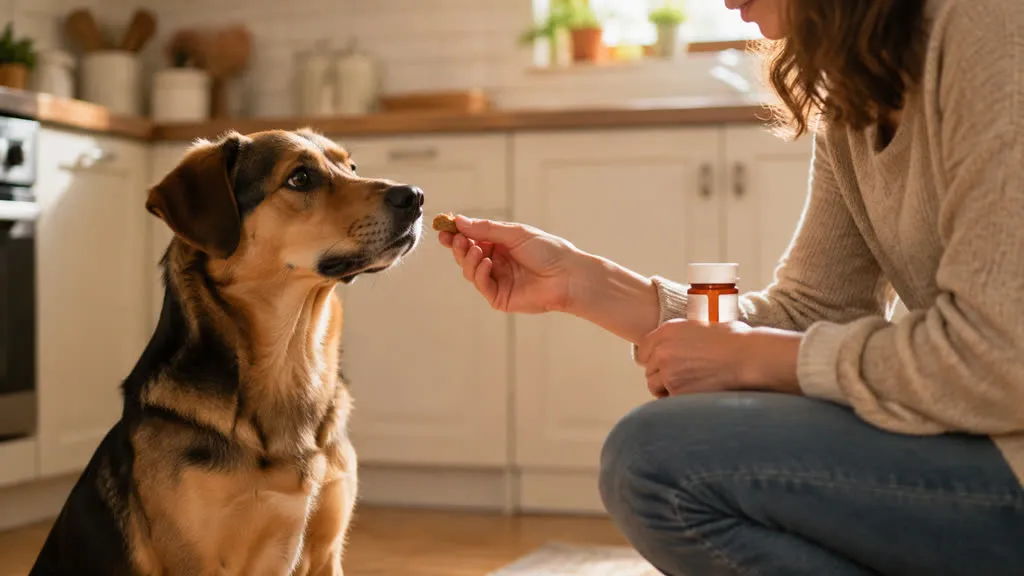
There is a moment every pet parent knows: you have a pill in one hand, your dog giving you the full detective stare, and a tiny piece of chicken in the other. The question feels harmless enough: can I mix my dog’s medicine with food?
Sometimes, yes. Sometimes, absolutely not. The annoying answer is that it depends on the exact medication, its formulation, and your vet’s instructions. That is not the kind of detail worth improvising because your dog has decided the pill is public enemy number one.
Before you hide, crush, split, open, or mix anything into food, call your vet or the pharmacy that filled the prescription. Ask whether that specific medicine can be given with food, whether it needs an empty stomach, and whether the tablet must stay whole. A quick question is much better than trying to solve a medical puzzle with peanut butter at 7 a.m.
Food can help, but it can also make the dose uncertain
When a vet says it is okay to mix a medication with food, the goal is simple: make it easy for your dog to take the full prescribed dose. The problem is that a big bowl of food creates a mystery. If your dog eats half, walks away, and comes back later, you no longer know how much medicine made it in.
Use the smallest amount of approved food that your dog will reliably finish. Give that medicated bite first, watch your dog eat it, then offer the normal meal. It feels a little dramatic to supervise one bite, but it beats spending the rest of the morning wondering whether the pill is hiding under the couch.
Do not assume that hiding a whole tablet and crushing a tablet are the same thing. Some medications have coatings or release systems that matter. Some should not be handled as powder. Some are prescribed to be taken at a particular time relative to meals. If the whole pill is not working, ask your veterinary team about other options instead of changing the medication at home.
The question to ask is not just “can I?”
When you call, keep the bottle nearby. Give the medication name, strength, dose, and the problem you are running into. Your vet can tell you whether it can go in food and what type or amount makes sense for that medication.
It is worth asking a few specific things in the same call: Does this need to be given with a meal or away from food? Can I put it in a small treat? Does the tablet need to stay whole? What should I do if my dog only eats part of it? Is there a liquid, flavored, or smaller alternative if this keeps being a battle?
That last question can be a lifesaver. There is no medal for forcing one technique that makes your dog anxious and turns every dose into a wrestling match. Your vet may have a better delivery option, or they may show you a method that is safer for that exact prescription.
Keep human meds and “helpful” extras out of the plan
Food is not a free pass to add whatever seems useful. Do not give human medications, over-the-counter products, vitamins, or supplements without veterinary guidance. Your vet needs to know about everything your dog takes, including flea and tick prevention, topical products, and the supplements that seem too harmless to mention.
The same goes for sharing medication between pets. A medicine that worked for one dog may not be appropriate for another dog, even if the symptoms look similar. Save yourself the guesswork and keep the original labeled container with the prescription.
What if your dog refuses the medicated food?
Pause before you try a second dose. If your dog licks the treat, chews the food, or spits out part of it, you may not know how much medication was swallowed. Do not automatically give more to compensate. Call the clinic for instructions that apply to the medication and the amount your dog likely received.
Write down what happened while it is still clear. Note the time, the medication, the food you used, whether your dog finished it, and anything unusual afterward. This is not about turning yourself into a vet. It is about giving the actual facts to the person who can make the medical call.
When Arya was going through complicated treatments, keeping pills, drops, antibiotics, and vet instructions straight was its own kind of chaos. That is why I built Arya: Pill Reminder. A reminder will not convince a suspicious dog to eat a pill, sadly, but a clear record can stop two people from guessing and make a call to the vet much more useful.
If medication time is getting messy, keep the schedule, dose history, and notes together in Arya: Pill Reminder or Google Play. Your vet decides what is safe to mix with food. Arya helps you remember what actually happened. 🐾