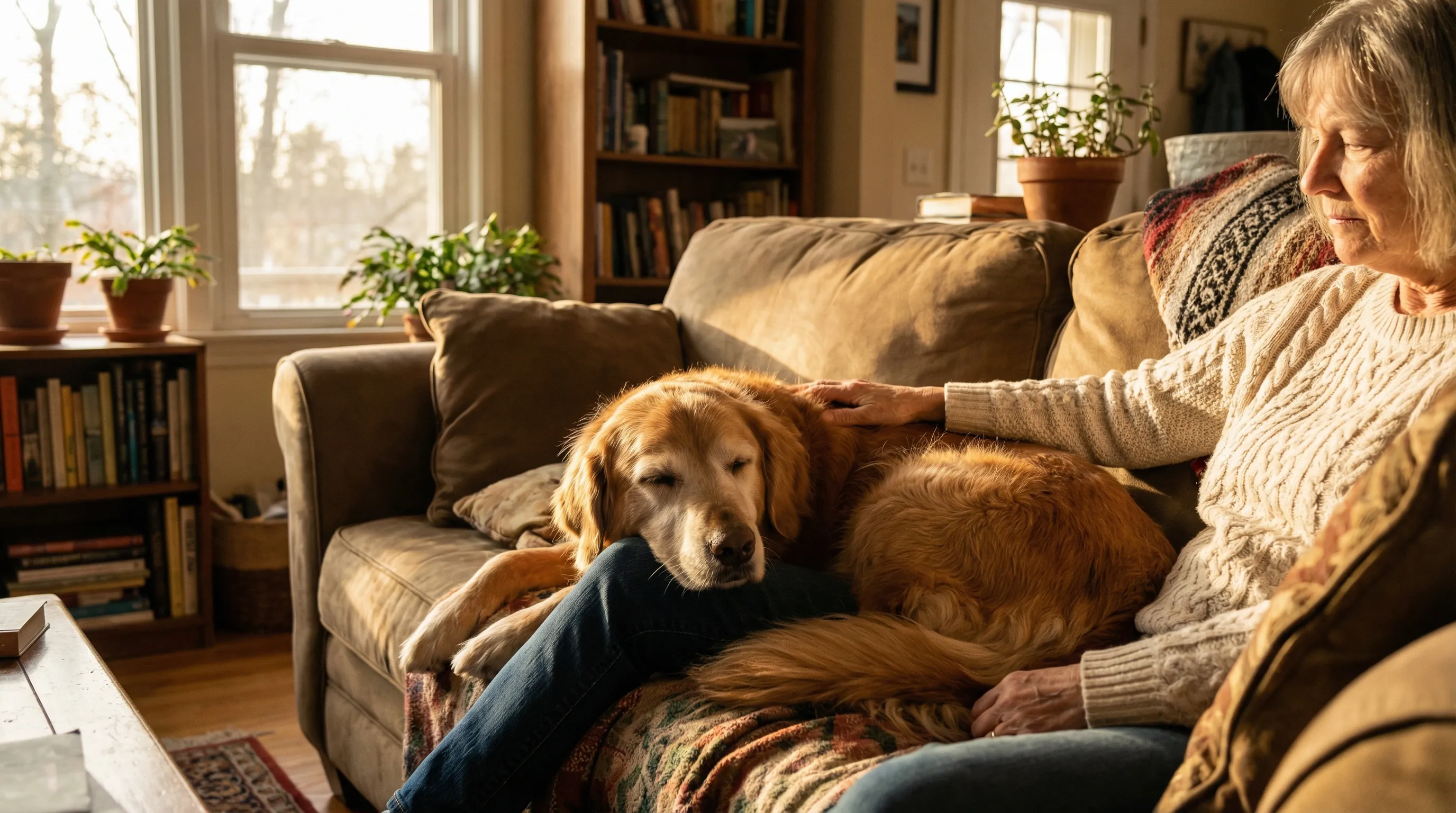
Caring for a Senior Dog: The Practical Guide Most Pet Parents Skip
Senior dogs need more than love. Here's how to manage their health at home: medication schedules, vet visits, and everything in between.
The day you realize your dog is officially a senior hits different.
Arya made me pay attention to these changes earlier than I expected. She is still young, only five, but going through serious health issues from puppyhood taught me to notice the small stuff fast: extra sleep, lower energy, subtle behavior shifts, the little signs that tell you something is changing before it becomes a bigger problem.
Caring for a senior dog isn’t dramatic. It’s mostly a series of small, ongoing adjustments you have to stay on top of. And the tricky part is that most of the guidance out there is either way too vague (“give them extra love!”) or buried in veterinary jargon that doesn’t actually help you do anything.
This is the practical version.
When Does a Dog Become “Senior”?
It depends on the breed. Smaller dogs tend to hit senior status around age 10-12. Large breeds get there earlier, sometimes as young as 7. Giant breeds like Great Danes can be considered seniors by age 5.
The most useful rule of thumb: once your vet starts using the word “geriatric” in appointments, it’s time to start adapting how you care for them at home, even if your dog seems perfectly fine.
The Vet Visit Cadence Changes
Healthy adult dogs typically need one annual checkup. Senior dogs need two, minimum. The reason is straightforward: things change faster as they age. Kidney function, thyroid levels, heart health, joint mobility: issues that would take years to develop in a younger dog can surface in a matter of months in a senior.
Bi-annual bloodwork becomes your new baseline. Don’t skip it even when your dog seems perfectly fine. That’s kind of the whole point.
What Actually Changes at Home
The physical adjustments are mostly common sense once you know to look for them.
Senior dogs sleep more. A lot more. That’s normal. What’s not normal is lethargy paired with a sudden drop in appetite, or limping that wasn’t there last week. The only way to catch those changes early is if you know what their baseline actually looks like day to day.
Food matters more than most people realize. Senior dogs often need fewer calories but more joint support. Ask your vet specifically about switching to a senior formula. Glucosamine and omega-3 fatty acids aren’t miracle cures, but the evidence for joint support is solid enough that most vets now recommend them as part of routine senior care.
Mobility gets trickier. Hard floors, steep stairs, and jumping onto high surfaces all get harder. An orthopedic bed, some grip tape on slippery floors, and a ramp for the car can make a real difference in their quality of life without requiring you to remodel your house.
Mental stimulation still matters a great deal. Old dogs can absolutely learn new things. Puzzle feeders, short training sessions, sniff walks, and low-key play sessions help keep their minds engaged. Cognitive decline in dogs is real, and keeping them mentally active is one of the best long-term investments you can make.
The Medication Reality
Here’s where senior dog care gets genuinely challenging. Senior dogs almost always end up on at least one medication. Sometimes several. Pain management for arthritis. Thyroid supplements. Heart medications. Allergy pills that don’t mix well with the pain meds.
The hard part isn’t giving them the pills. It’s managing the schedule consistently, especially when your dog has medications at different times of day, or when one has to be given with food and another can’t be.
Missing a dose matters more with some medications than others. Thyroid meds, for example, need to be given at consistent intervals to maintain stable hormone levels. Skipping days here and there doesn’t just mean a missed dose; it actively reduces how well the treatment works over time.
I built Arya specifically because this was my reality. Not because she is a senior dog, but because managing a complicated treatment routine taught me how quickly pet care gets messy when medications pile up. Tracking multiple medications, knowing what to refill and when, keeping a log I could actually show my vet at the appointment instead of guessing. It was the kind of thing that should be simple but somehow never was.
If your senior dog is on any kind of regular medication, a dedicated app to manage it isn’t overkill. It’s just good care. Download Arya on the App Store or get it on Google Play. It’s free to start.
The Honest Part
Senior dog care isn’t a checklist you run through once and forget. It’s continuous attention. Noticing things. Adjusting things. Showing up consistently even when your dog seems like they’re doing fine.
The years with a senior dog move differently. Slower, but somehow also faster. The extra care you put in now is how you make sure those years are actually good ones.
Arya still runs to the door when she hears the leash. What changed was not her age category overnight, it was how much attention her health taught me to pay to the little signals. Some things do not change. 🐾