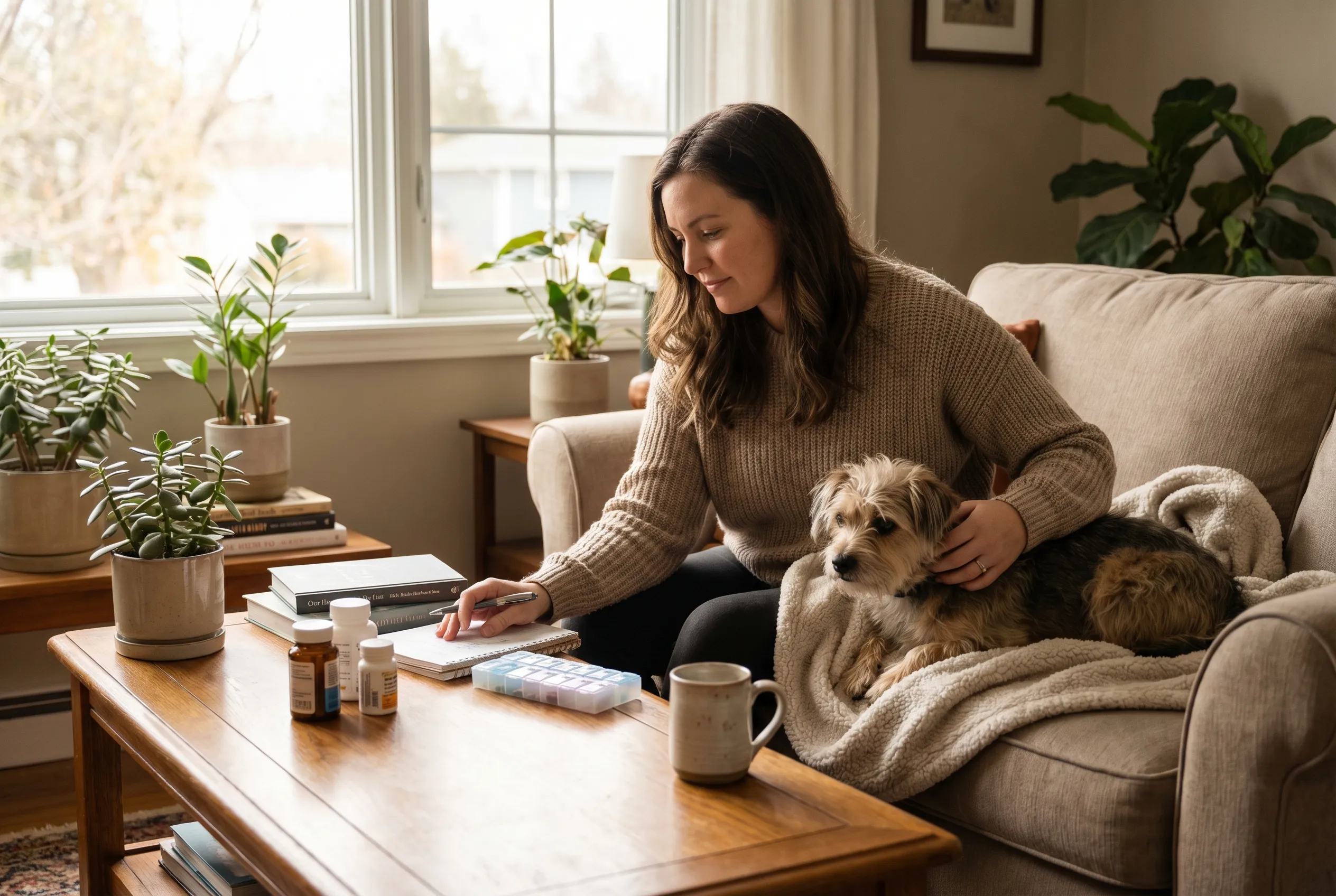
When Your Dog Is Too Young to Be This Sick
Getting a scary diagnosis for a young dog hits different. Here is what to do in the first 24 hours, how to stay organized, and how to stop drowning in medications and vet notes.
There is a moment that hits different as a pet parent.
You are not expecting it. Your dog is young. You got the breeds, the energy, the mischief. You thought you had years before health concerns would be part of the picture. And then your vet sits down, or calls you back, or looks at you in that specific way, and suddenly everything changes.
Nobody prepares you for that.
When it happened to me, my first instinct was to ask a thousand questions at once and simultaneously forget every single thing the vet said in the next five minutes. I was scared, I was overwhelmed, and I was trying to hold together something that felt like it was falling apart.
If you are in that moment right now, or if you are close to someone who is, here is what I wish someone had told me.
The first 24 hours: slow down
The worst thing you can do is try to absorb everything at once. A diagnosis comes with words you have never heard, treatment plans that sound like a part-time job, and a timeline that nobody can predict accurately.
Take a breath. Write down what you heard. Sleep on the big decisions if you can. You are not going to solve everything tonight, and that is fine.
What you can do tonight: note symptoms, start a log of medications and doses, and find one quiet moment to just sit with your dog. That matters more than you think.
Start a health journal, even if it feels silly
I resisted this at first. It felt like extra work on top of everything already piling up. But a simple log of what your dog ate, how they slept, any changes in behavior, and every medication given is the single most useful thing you can have at your next vet visit.
Your vet cannot see what happens between appointments. A log fills that gap. It helps you spot patterns, catch side effects early, and actually remember what changed between visit A and visit B.
You do not need an app for this. A notebook works. But if you are like me and you have three alarms on your phone just to remember the eye drops, you probably need something with more structure.
The overwhelm is real, and it compounds
Here is the part nobody talks about honestly. It is not just the diagnosis. It is the appointments, the medications, the refills, the drop schedules, the specialist referrals, the notes you took that you cannot read anymore, the “was that dose this morning or last night” panic at 2 a.m.
That mental load does not fade. It stacks. And if you do not have a system for it, it will pull you under.
I built the Arya app because I was exactly here. Juggling Arya is medications, her eye drops, her antibiotic schedule, her follow-up appointments, all while trying to remember what the vet actually said about her bloodwork. Phone alarms were not enough. Scattered notes were not enough. I needed one place that had the full picture.
If you are drowning in this, that is not a character flaw. It is a systems problem. The solution is better organization, not more willpower.
When to push for more answers
Your vet is good, but they are also busy. If something does not feel right, or if the diagnosis does not come with a clear next step, ask for more. Ask for bloodwork to be explained to you in plain terms. Ask what the worst case scenario looks like. Ask what happens if you wait a week before starting treatment.
You are your dog only advocate. There is no medal for quietly accepting a scary diagnosis without questions. Push until you understand what you are dealing with.
And if your vet dismisses your concerns, get a second opinion. That is not disloyal. That is responsible.
You are doing better than you think
There is a specific guilt that comes with having a sick dog. Like you should have caught it sooner, done something differently, been more prepared. I felt it. A lot of us in this situation feel it.
Here is the truth: you brought your dog to the vet. You followed up. You are reading this, which means you are trying. That is already more than enough.
Your dog needs your consistency and your presence, not your perfection.
The medications, the logs, the early morning appointments, the 2 a.m. check-ins. It is a lot. But it is temporary in the sense that it gets easier once you build a system that works. Until then, take it one dose at a time.
Arya: Pill Reminder is free to start and available on iOS and Android.
It was built for exactly this. No magic, no promises. Just one less thing to worry about.